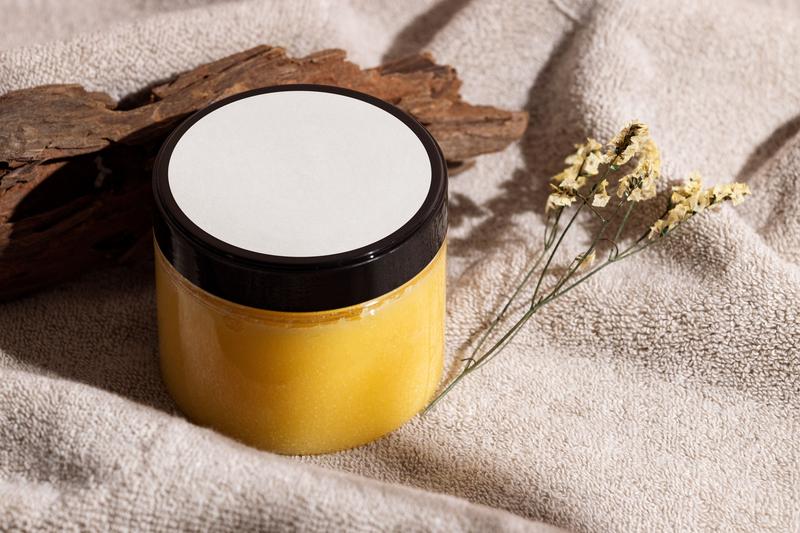
Dry skin on the legs and arms can be uncomfortable. It can feel tight after showering, flaky on the knees, and itchy in the evenings. Due to the light, watery nature of some body butters, it may wear off quickly. People may try to apply more, or change products monthly, leading to lots of different body butters in your bathroom.
Choosing a firming body butter for dry skin becomes easier if you know what ingredients are present, and what they do. Knowing what ‘firming’ really means in this context is also helpful.
Why dry skin?
Skin is similar to brickwork. The ‘bricks’ in this brickwork are cells. Natural oils are the cement to hold everything together. If the cement becomes thinner (due to hot showers, harsh soap, cold temperatures or simply getting older) water will escape easily from the skin.
As legs and shins have less sweat glands in the skin than on the face, they tend to be dried out first.
Butters vs lotions
As lotions are largely water based, they can feel light. However, a large amount of the product can be lost due to evaporation. Body butters are heavier and contain more oils and fats in order to reduce water loss from the skin.
Compare water in a glass, to honey in a jar. The water would run straight out, however the honey would stay.
Tradeoffs. Butters can feel heavy and greasy, particularly in warm temperatures. For this reason people sometimes only apply body butters at night.
Firming
Many body butters make skin appear smoother and slightly firmed. This is largely due to well hydrated skin appearing more full. Often ingredients such as caffeine, retinol and peptides are present. However, evidence for visible firming effects is generally limited.
Body butters cannot firm sagging skin, or reduce stretch marks. If someone claims this is possible, they are being misleading. Skin can be made slightly firmer by hydrating, protecting from sun damage, and leaving it to go naturally.
Sensitivities
Strong perfumes can cause irritation to dry, flaky skin. Therefore, fragrance free options can be a better option, particularly if you suffer from eczema. As with any new product, it can be a good idea to perform a patch test on the inside of your arm. Leave it on for 1-2 days.
If you have a rash that is not clearing, or bleeding and cracked skin, see a doctor. Body butters should only be used for skin care and not treatment.
Application
Apply immediately after a shower, when skin is still slightly damp. Warm a small amount in your hands before applying.
Apply to dry areas (shins, elbows and heels). Apply smaller amounts to oily/ sweaty areas. Other quick tips
Take short, warm showers. Don’t use harsh soaps. Using a humidifier in colder months may help. Putting on sunscreen on exposed skin can help maintain collagen in your skin. This is much more important in gaining firm skin than any body butter.
Label Reading
Ingredients are listed in order of quantity. If a key ingredient is listed towards the bottom of the list, it likely contains very little. The phrases “clinically proven” and “dermatologist tested” mean very little. Try to find information on who conducted the trials, and how many people were involved.
Price does not necessarily indicate quality. Many cheap butters will contain the same basic ingredients as expensive butters.
Be patient
Dry skin should improve within days. Any changes in skin texture/ appearance will take weeks, but will not be huge. Changing products every 10 days will make it difficult to know what is effective.
Summary
Applying a decent body butter daily after bathing, alongside gentle cleansing and sun cream, should do the trick.
Soft skin is the main gain. Everything else is just a bonus!